
BUY TO LET MORTGAGES UK – Requirements, Deposits & Rental Stress Tests
BuyToLetAdviser helps property investors find suitable lending for buy to let mortgages UK only. These mortgages are designed for landlords purchasing investment properties to rent to tenants rather than live in themselves. Lenders assess buy to let applications in many ways, typically using expected rental income, rental stress testing, landlord experience and property type, along with the number of investment properties already owned, rather than relying purely on the borrower’s personal income. Understanding lender criteria and comparing available options can help investors secure finance suited to their investment plans.
BuyToLetAdviser provides information about common buy to let lending scenarios and allows UK property investors to submit an enquiry form to be connected with an experienced mortgage adviser to discuss their plans and strategy.
What Is a Buy to Let Mortgage?
A buy to let mortgage is a loan designed for purchasing property that will be rented to tenants. Unlike residential mortgages, buy to let lenders focus primarily on the expected rental income from the property rather than the borrower’s salary. The rent must normally cover the mortgage payment by a set margin known as a rental stress test, ensuring the investment remains viable even if interest rates rise. These mortgages are commonly used by first-time landlords, experienced property investors and more recently Limited Companies, building long-term rental portfolios.
Common factors considered by lenders include:
- Rental stress testing calculations.
- Deposit requirements.
- Property type and location.
- Investor experience.
- Existing portfolio exposure.

Buy To Let Mortgages UK – Key Requirements Investors Should Know
Buy to let lenders assess several factors when reviewing a mortgage application. Investors new to property may also want to explore first time landlord mortgages to understand how lender criteria can differ.
While requirements vary between lenders, most will look at the expected rental income, as confirmed by a surveyor, the borrower’s experience as a landlord, and the type of property being purchased. Many lenders also require a minimum personal income, often around £25,000 per year, although this varies depending on the lender and overall financial profile. Credit history, age limits and the borrower’s existing property portfolio can also influence lender decisions.
- Age and Experience.
- Perspective Tenant Type.
- Property Type – House, Flat, Apartment, HMO, Commercial.
- Personal Status and Credit History.
- Capacity to maintain payments in void periods.
Buy to Let Deposit Requirements
Most buy to let mortgages UK Investment properties require a minimum deposit of around 25% of the property value (There are a limited number of lenders offering 20%). Understanding deposit requirements is also important when reviewing buy to let remortgages, particularly when releasing equity from an existing property. However, larger deposits can often improve mortgage rates and increase lender choice. Certain property types, such as HMOs or flats above commercial premises, may require higher deposits due to perceived lending risk. Investors expanding their portfolio may also encounter additional requirements depending on the size and structure of their property holdings and exposure limits. Rental income from buy to let properties may be subject to UK tax rules as outlined by the government.
Rental Stress Test Explained
Buy to let lenders use a rental stress test to ensure the property’s rental income comfortably covers the mortgage payment. This test usually requires the rent to cover typically 125%, 145% or even 160% of the mortgage interest payment, calculated using a stressed interest rate set by the lender. Higher rate taxpayers may face stricter calculations, while limited company borrowers may be assessed differently. The purpose of the stress test is to ensure the property remains financially sustainable even if interest rates increase.
Example Rental Stress Test Calculations
The examples below show how different lender stress test levels can affect the rental income required for a typical buy to let mortgage. These examples are for illustration only and lender criteria vary.
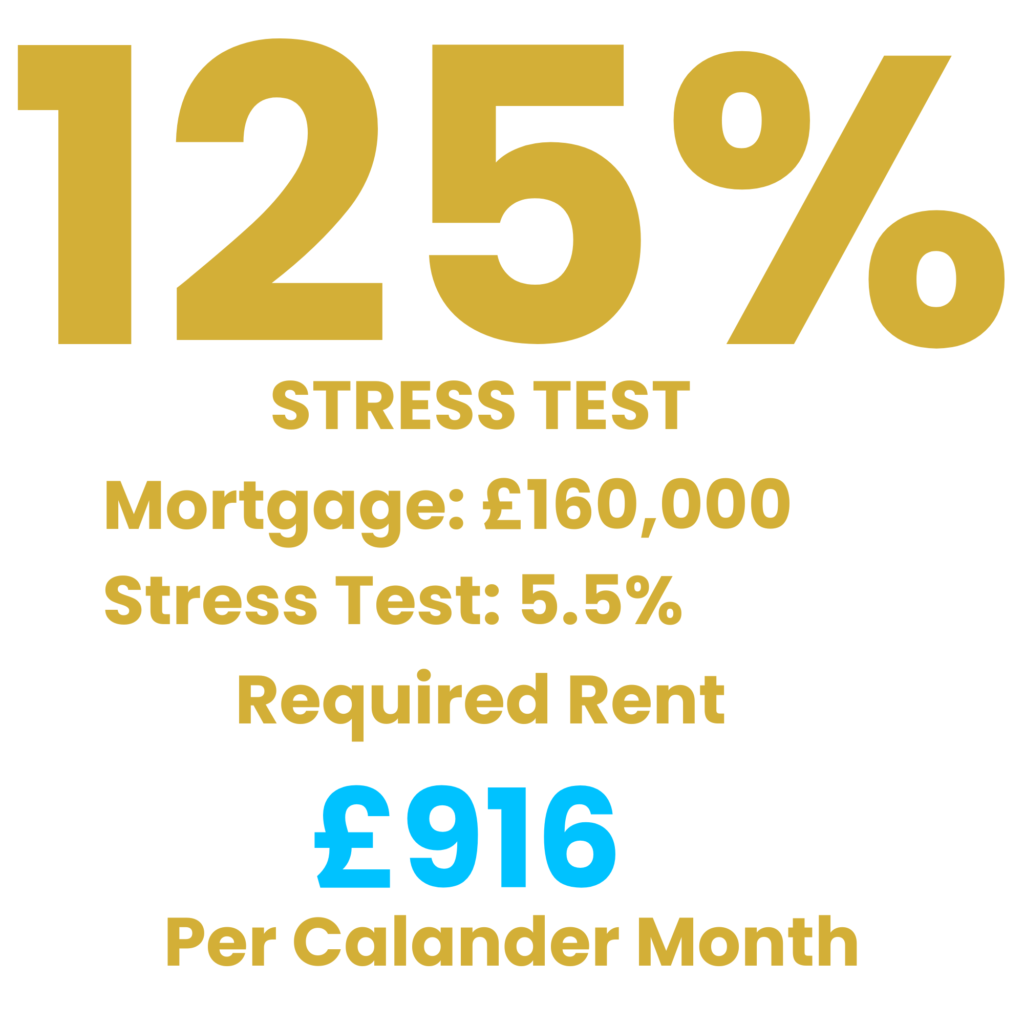
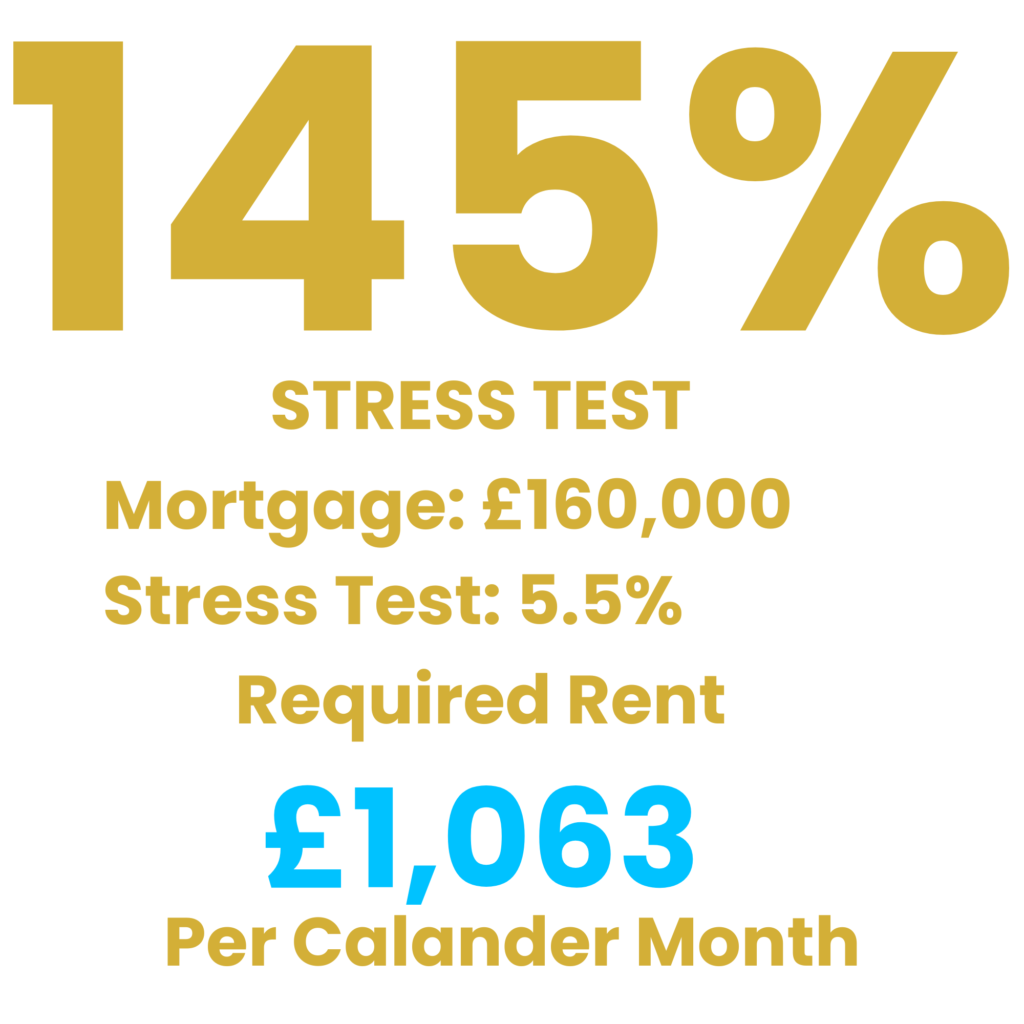
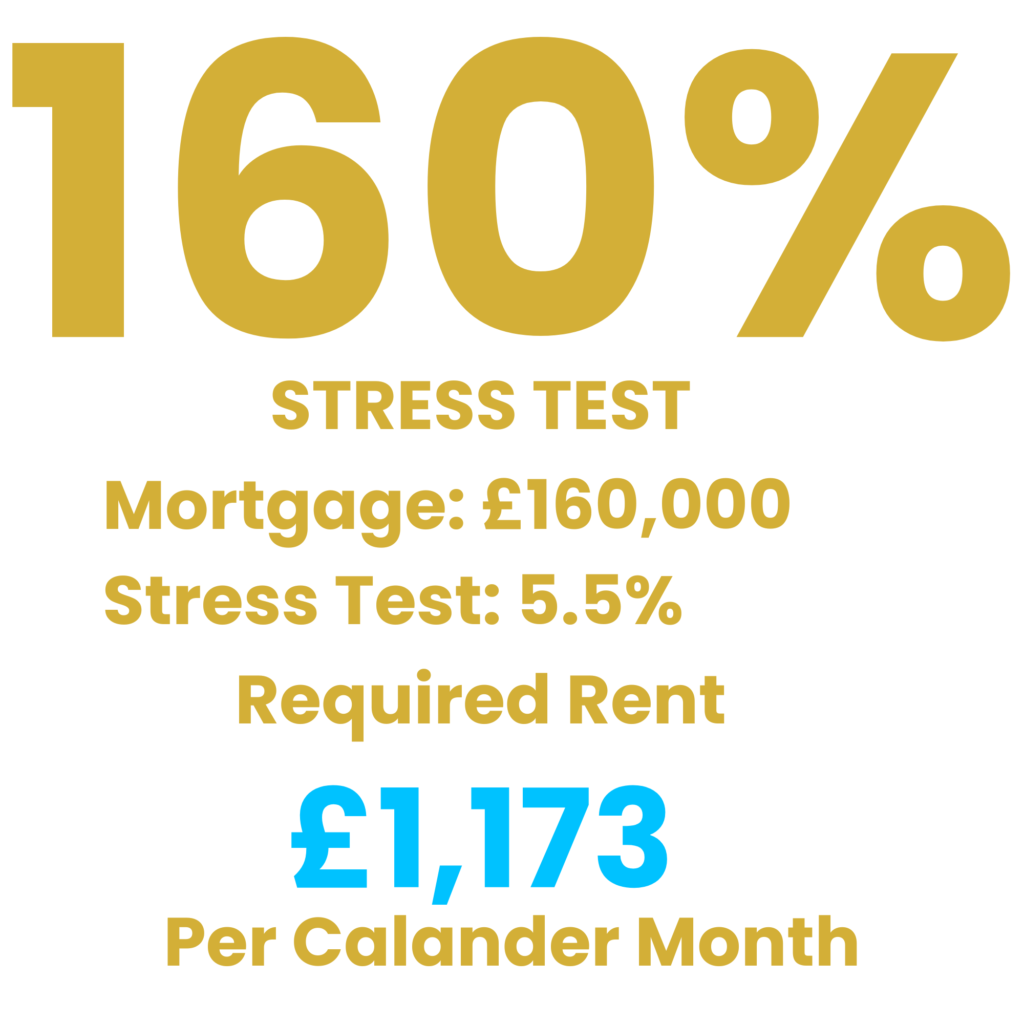
These examples are for illustrative purposes only. Rental stress testing and affordability calculations vary between lenders and individual circumstances. Mortgage rates and stress testing are influenced by wider market conditions, including decisions from the Bank of England.
Who Can Get Buy to Let Mortgages UK investors?
Buy to let mortgages, UK Only are available to a wide range of investors, including first-time landlords, experienced property investors and portfolio landlords. Some lenders allow first-time buyers to obtain buy to let mortgages, although this is less common and often subject to stricter criteria. Investors can purchase properties in their personal name or through a limited company structure, depending on their tax planning and investment strategy. Portfolio landlords with multiple properties may face different lending criteria, which is covered in more detail within portfolio landlord mortgages.
Limited Company Buy To Let Mortgages UK
Many property investors now purchase rental properties through limited company buy to let mortgages UK, often using a Special Purpose Vehicle (SPV). This structure can provide tax planning advantages for some investors, particularly those building larger portfolios. Lenders will assess the company structure, directors and shareholders when considering the application, and personal guarantees are commonly required.
Speak to a Buy to Let Mortgage Adviser
Choosing the right buy to let mortgage can depend on multiple factors including deposit size, expected rental income, property type and investment strategy. By submitting a short enquiry, investors can be matched with a specialist adviser who understands the buy to let mortgage market and lender criteria for UK landlords.
Buy to Let Mortgages UK FAQs
Q. How much deposit do you need for a buy to let mortgage?
A. Most lenders require a deposit of at least 20–25%, although higher deposits can improve mortgage rates and lender choice.
Q. Can first-time landlords get buy to let mortgages?
A. Some lenders will consider first-time landlords, although the available products may be more limited and stricter affordability rules may apply.
Q. How much rent is required for a buy to let mortgage?
A. Lenders normally require the rent to cover 125–145% of the mortgage payment, calculated using their stress testing rate.
Q. Are buy to let mortgages interest only?
A. BTL Mortgages can be both Interst Only or Capital Repayment. Many buy to let mortgages are taken as interest-only, allowing investors to keep monthly payments lower while relying on property value growth or sale to repay the capital.
Request Buy to Let Mortgage
If you are considering an investment in buy to let mortgages UK, you can submit an enquiry through BuyToLetAdviser to be contacted by an experienced regulated adviser operating within the buy to let market.